Positioning Your School for Success in the Growing Alternative Credentials Market
How to Best Position Your School as Alternative Credentials Market Grows
By Juliet Crichton and Ally Lopez
Spurred in part by online education’s explosion during the pandemic lockdown and the ensuing economic downturn, alternative credentials are in the midst of sustained growth—and the market’s momentum is predicted to accelerate during the 2022-27 forecast period.
Often called microcredentials, these non-degree educational offerings include the following:
- Professional certification
- Executive development programs
- Licenses
- Digital badges
- Apprenticeships
- Skills-based short courses, or bootcamps
- Massive open online courses, or MOOCs
A unifying objective behind these offerings is to equip learners with the expertise and skills to advance their earning potential in less time and with less financial commitment than a degree program.
Because they focus on competencies and practical, adaptable skills—often digital—that directly meet employer needs, alternative credentials are pursued by a range of learners: from current and prospective students to recent college graduates, laid-off workers, and remote employees.
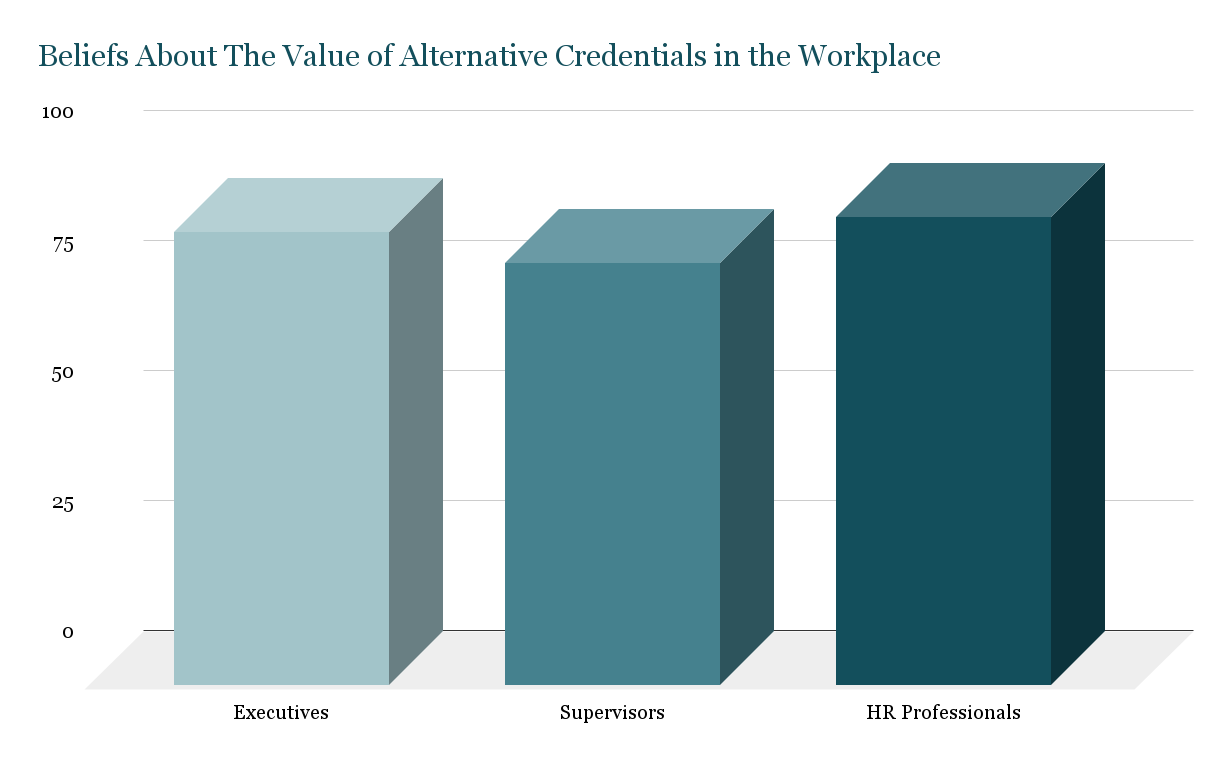
In turn, employers looking for workers who need minimal training upon entering the workforce have become increasingly receptive to alternative credentials, a marked shift from a decade ago. An April 2022 report from the Society for Human Resource Management, ”The Rise of Alternative Credentials in Hiring,” found that 87% of executives, 81% of supervisors, and 90% of human resources professionals felt that employees who held alternative credentials bring value to the workplace.
In light of this growing acceptance of alternative credentials in the workplace, the timing is ideal for universities to engage in this market.
Examples of Alternative Credentials Offered in Higher Education
Traditional colleges and universities are well positioned to dictate how alternative credentials can meet both workforce demand and learners’ needs, as well as improve student success, retention, and recruitment.
Besides enabling new revenue streams when tied to formal degree programs, microcredentials can appeal equally to prospective students, especially those wishing to get more bang for the buck in a four-year degree program, and to non-degree workers wishing to complete credentials.
With an eye to the near-future, investing in alternative credentials now can potentially help universities better withstand the effects of the looming enrollment cliff in 2025, when the college-age population will begin to shrink dramatically.
In 2018, the State University of New York system became one of the first in higher education to draft a broad microcredential policy, based on work by a task force that had been formed in 2015.
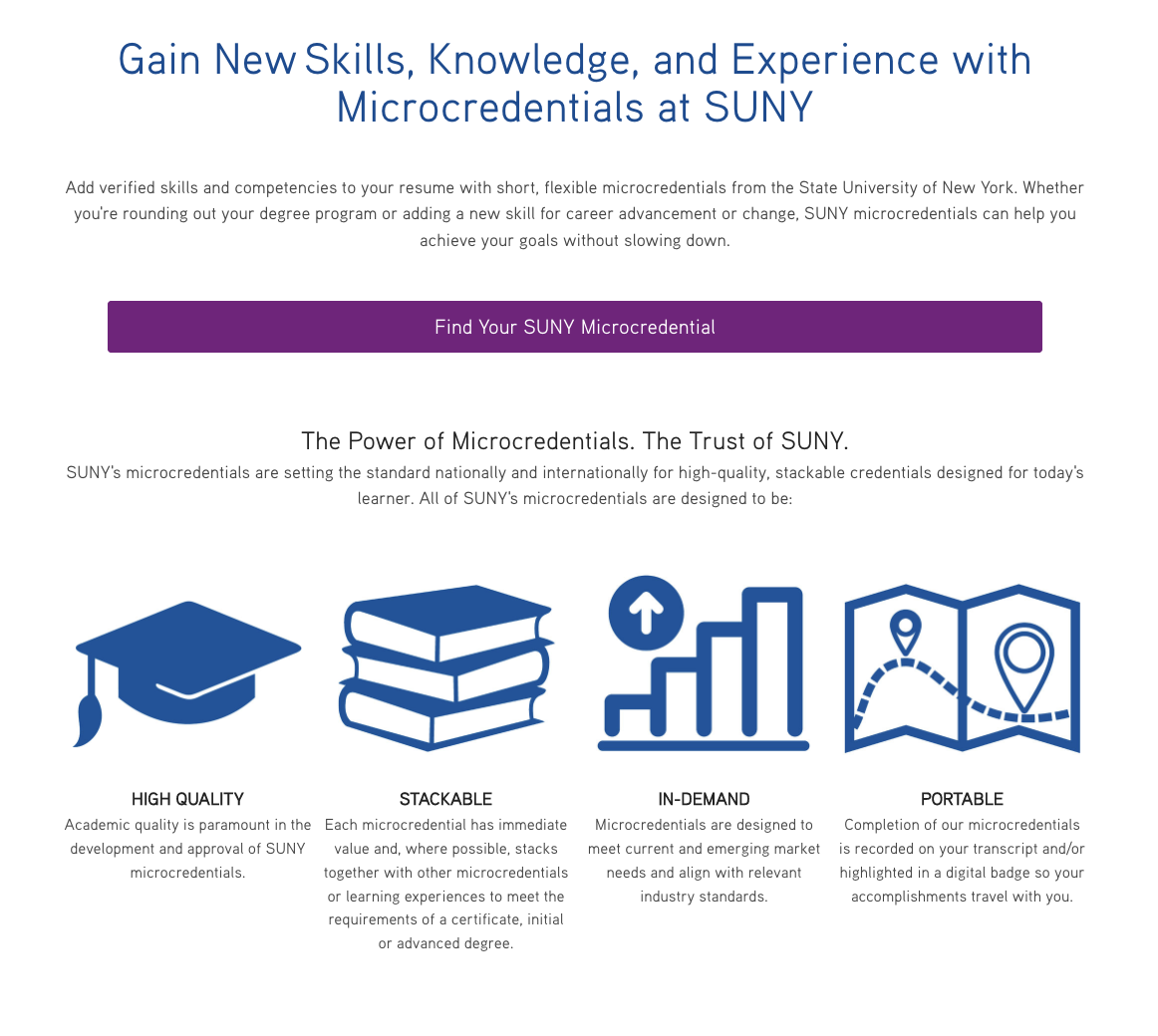
Now, across its many campuses, SUNY offers more than 500 microcredentials in 60-plus discipline areas in high-demand fields, such as computer science, data science, and analytics, and renewable energy, green building, and clean technology. Taught by SUNY faculty, the microcredentials are offered online, in the classroom, and at work sites with employer approval.
To increase their appeal, the microcredentials are offered in several formats: courses, often in groups of three, that are part of degree programs; a series of workshops; or a combination of coursework and an applied learning experience or industry certification preparation.
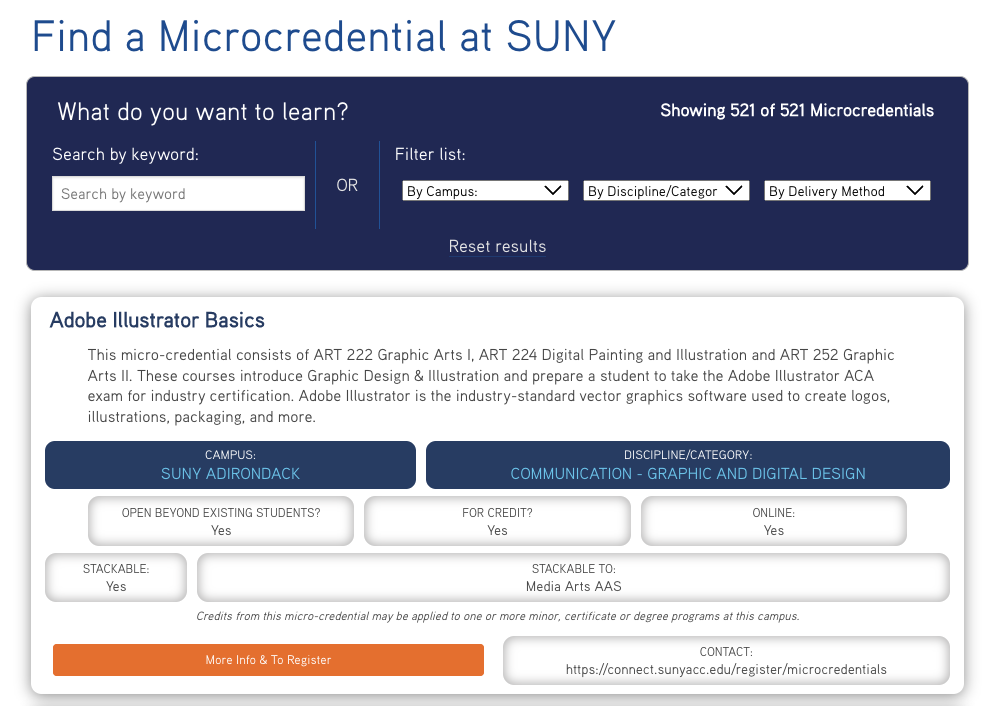
A notable feature of SUNY’s microcredential program is its searchable database, which helps current students, alumni, support professionals, and learners find the instruction they seek.
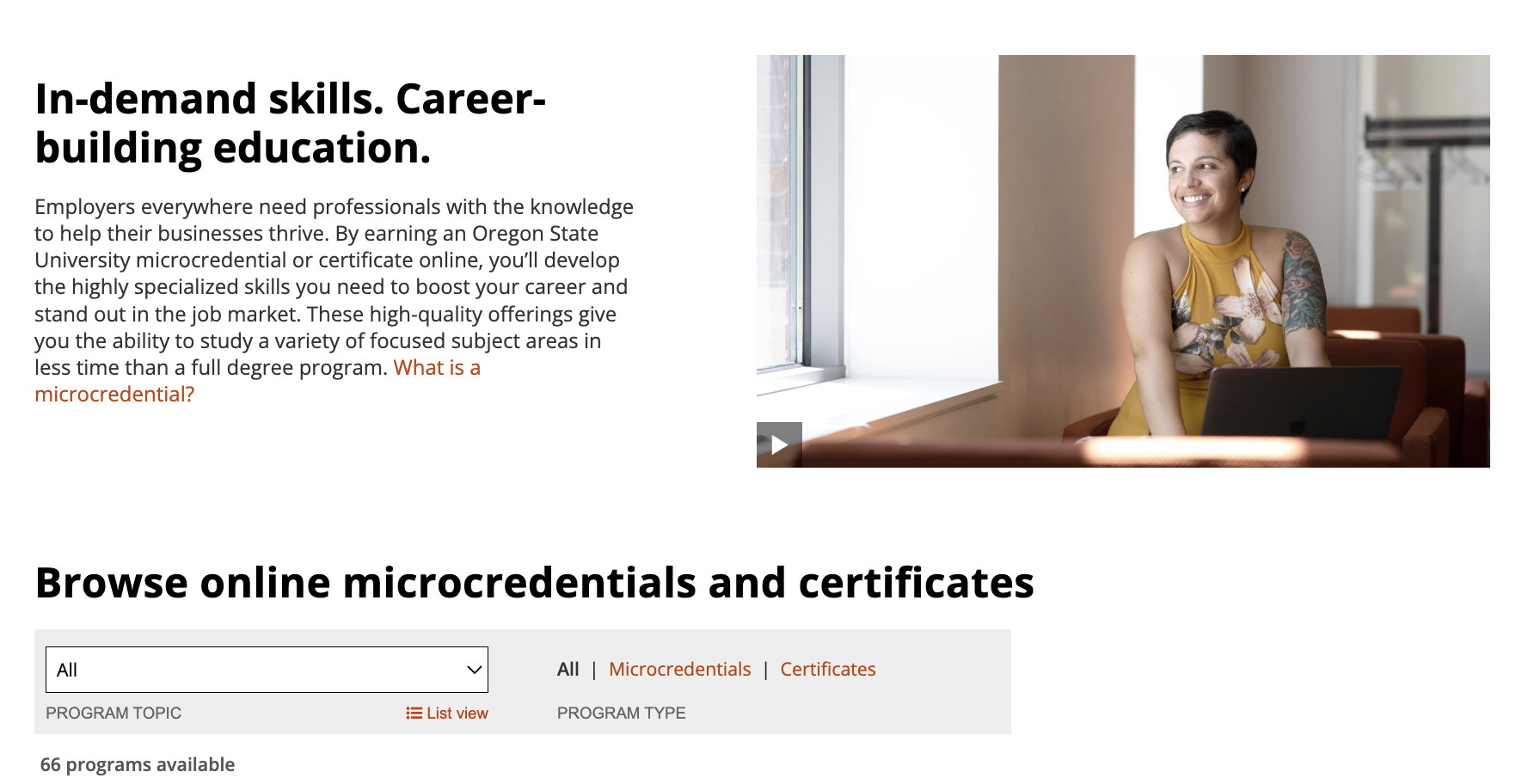

Like SUNY, Oregon State University has developed a searchable database of its microcredential offerings. Developed and taught by OSU faculty, they range from three-course programs, many of which can be applied toward degree programs; undergraduate certificates, often requiring up to 27 credits of coursework; graduate microcredentials of three courses; and graduate certificates, which vary in the number of courses required, but may be applied to a degree program.
OSU microcredentials follow the university’s quarterly term calendar and are available to all students, including non-degree-seeking or non-traditional students, as well as working professionals. While microcredential courses do not require a college degree, graduate-level microcredentials do.
In both instances, the microcredentials offered at SUNY and OSU expand recruitment and ultimately enhance the workforce. In short, they are a value-added benefit for all.
Integrating Alternative Credentials into Institutional Strategy
When considering the viability of offering alternative credentials at your institution, first determine how they fit into your overall institutional strategy:
- Does the microcredential concept align with your school’s mission? For instance, a land-grant university charged with expanding educational opportunities and improving lives might be in an ideal position to develop microcredentials targeted to a particular skill area.
- Does your school possess academic strength(s) in in-demand subject areas? In recent years, microcredential courses related to business, technology, and public health have proven to be especially popular among learners looking to advance their careers.
With proper research and preparation, your school can position itself to develop sought-after microcredentials based on your specific audience, your unique institutional brand, and your faculty expertise. We recommend undertaking the following market research before implementing a strategy for alternative credentials:
- Get to know your current and prospective students and your broader audience: Employability is important to today’s learners. Understanding your students and their needs will help you determine how to appeal to them and what type of courses to offer.
- Get to know employers’ needs: Employers want workers who can hit the ground running with minimal training. Research current job trends to align the alternative credentials with job market needs.
- Get to know potential corporate partners: Consider your school’s strengths to determine if a partner makes sense. Say your school offers a healthcare management program; a partnership with a healthcare system or hospital would be ideal.
- Get to know industry providers: The University of Michigan partnered with a corporate entity to deliver its alternative credentials. Determine if a learning provider specializes in courses and timely content that align with your current curriculum strengths and can add value.
- Get to know your faculty: Before you launch any microcredentials programs, faculty must be prepared to evaluate and approve them.
Marketing Advice to Get You Started
As alternative credentials continue to grow in the U.S. educational arena, a robust evaluation of your school and its capacity is essential.
- Begin with data analysis: Are there demonstrated segments that are already enrolling in microcredentials at your institution? If that’s the case, start by mirroring this audience when promoting new offerings and allocate at least 80%.
- Test and optimize: Allocate 20% of your spending on efforts to test new audiences.
- Advocate for solid budgets: Make sure that your faculty and administration are aware that you need to be positioned for success. Create a budget by taking enrollment goals, assuming a $50-plus cost per lead, and a 5% conversion from lead to enrollment.
As the demographics of higher education continue to shift away from traditional, full-paying students, alternative credentials have grown in reputation and value.
Targeted research can help you create practical, competency-based learning opportunities that resonate with your stakeholders and fulfill real-world needs.
Need Help?
If you’re looking to dive into marketing your alternative credentials but aren’t sure where to begin, we’re here to help! Send us an email or schedule a call for more strategies to get the ball rolling.